Articulation practice at home
Practising speech sounds at home, without the pressure.
For roughly 1 in 12 young children, certain speech sounds are hard to produce clearly — and the world keeps asking them to say it again. The problem was never the thinking. It’s the gap between what she means and what others hear.
The question a child with unclear speech hears all day
Feel it
Try to be understood
Content warning: a simulation of not being understood, with sound. You’re four years old. You want the red ball. Tap to say it — and watch what comes back.
You know the words perfectly in your head. Your mouth makes them a little differently. Tap “Say it” and see how the grown-up responds.
You say:
“I want the red ball.”
The grown-up:
…
A gentle simulation of one small, constant frustration. Press Begin when you’re ready.
What it is
A clarity difference, not a thinking difference.
Speech-sound difficulties are when a child has trouble producing certain sounds clearly enough to be understood — substituting, dropping, or distorting them (“wabbit” for “rabbit”). Some errors are a typical part of development at a given age; they’re looked at when they persist or make a child hard to understand. Most have no known cause, and many children make progress with patient, repeated practice.
Short, repeated practice can help families carry a speech-language pathologist’s plan into everyday life. The hard part is keeping that practice calm and consistent — while keeping the parent, not an algorithm, in charge of judging each attempt.
What people feel
A child’s confidence, and a parent’s worry.
For the child: being asked to repeat themselves, being talked over, slowly shrinking back in class. For the parent: a quiet, persistent worry tangled up in logistics — getting an evaluation, facing a waitlist, affording sessions, and trying to help at home without knowing if it’s working.
The hardest part is the not-knowing. A simple record of what was practised can make the next appointment more concrete — without pretending an app can diagnose or replace professional judgement.
Exactly what it does — and doesn’t
What it does
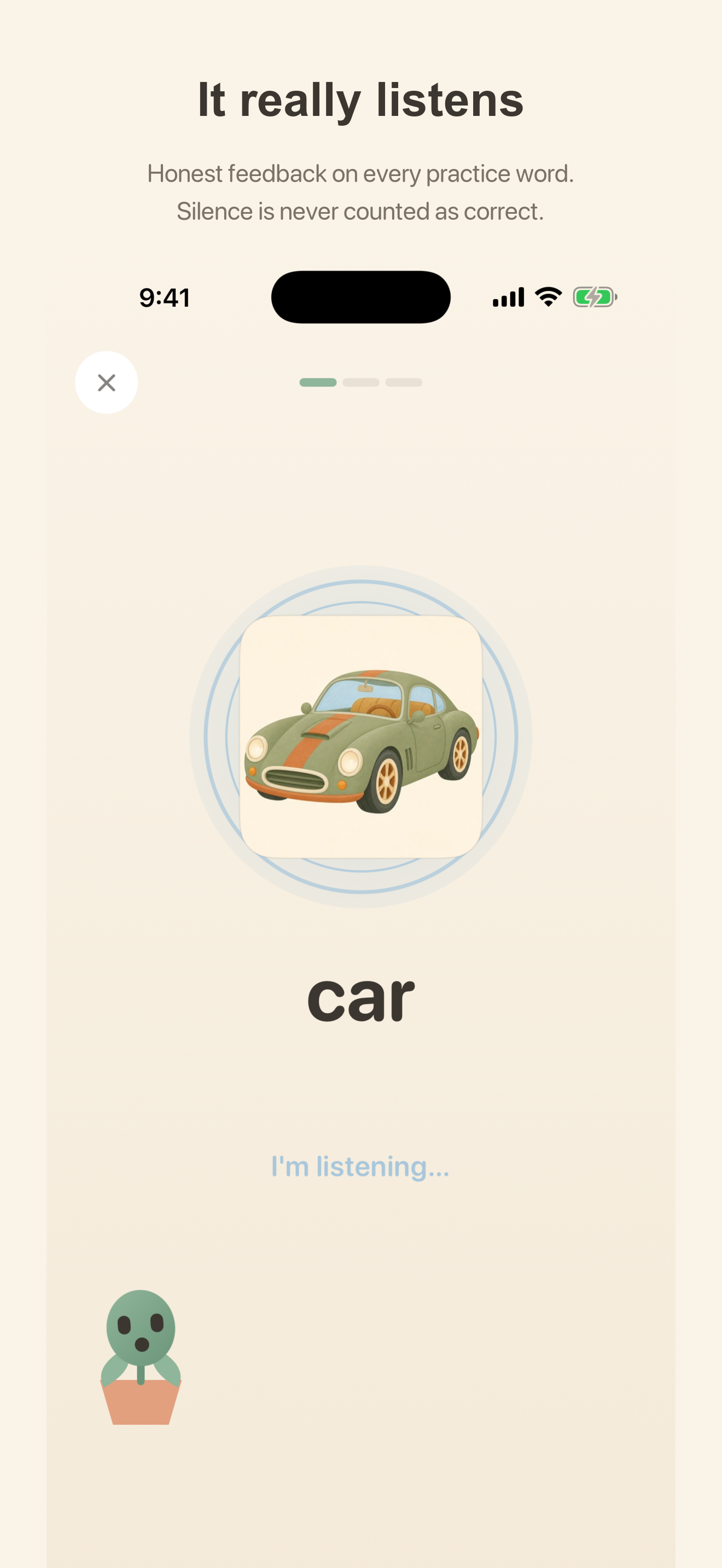
Pick a word and say it out loud. SpeechSeed plays back the whole word it heard and helps a grown-up track practice over time.
What it measures — and how feedback works
Using Apple’s on-device speech recognition, the app listens for that whole word and tells you whether it heard it. It recognises whole words, not individual speech sounds, and it never scores pronunciation. A grown-up who heard the attempt chooses Try again, Almost, or Got it. Quiet or unclear tries are never marked correct.
What it is not
A practice and support tool. It does not diagnose, treat, or replace professional care.
The app
SpeechSeed
A calm practice companion for the time between appointments.
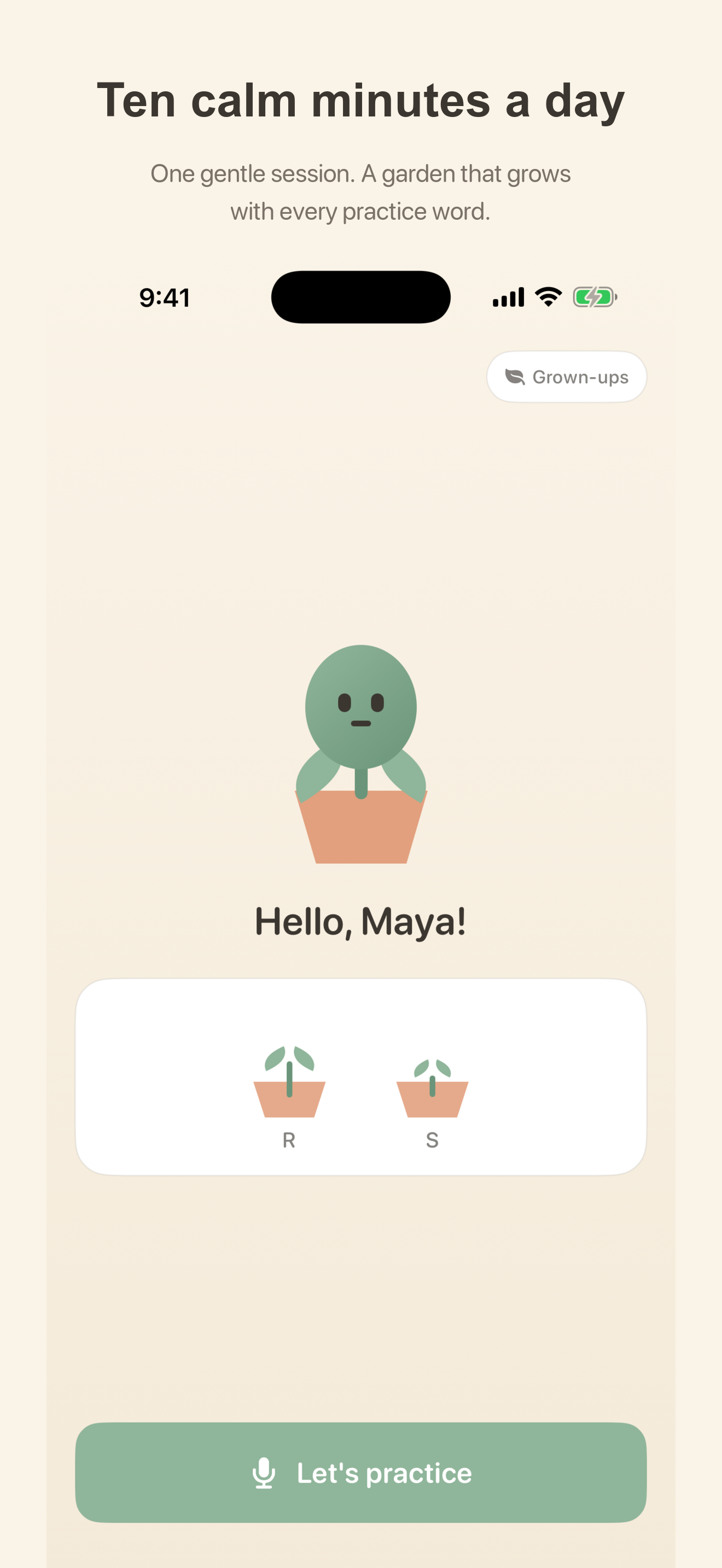
SpeechSeed listens on-device, so practice audio stays on the device. Words are grouped across 22 speech sounds — organised by the sound each word helps with, so a family can find the right words to practise. It uses whole-word recognition as one clue, then asks the grown-up who heard the attempt to judge it. That keeps the feedback useful without pretending a phone can score an individual speech sound.
Free to use. Any optional upgrade is shown in the App Store before purchase.
Explore the word lists: R sound words, S sound words, L sound words and TH sound words, and the speech-sound age chart. Are you an SLP? How SpeechSeed fits home practice between sessions.