The kitchen table
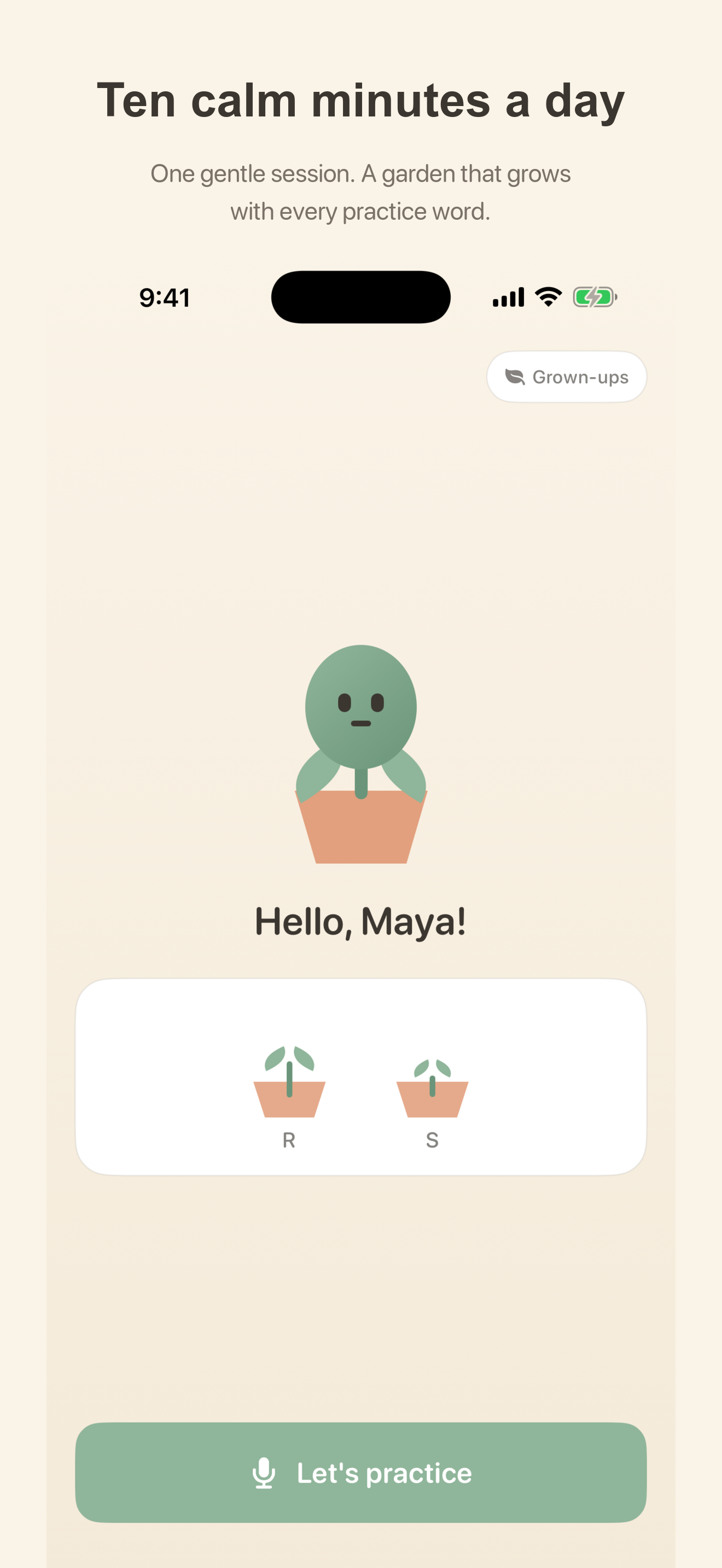
Ten calm minutes after dinner: five R words, a wobbly “wabbit”, two clear “rabbit”s — each verdict made by the parent who actually heard them. The garden grows a little.
Children’s speech
Meet SpeechSeed.
SpeechSeed helps families practise speech sounds at home across 22 sounds — private and on-device, with a grown-up, not an algorithm, judging each try. A practice and support tool, not a replacement for an SLP.
Free to use. Any optional upgrade is shown in the App Store before purchase.
What it does
How it works
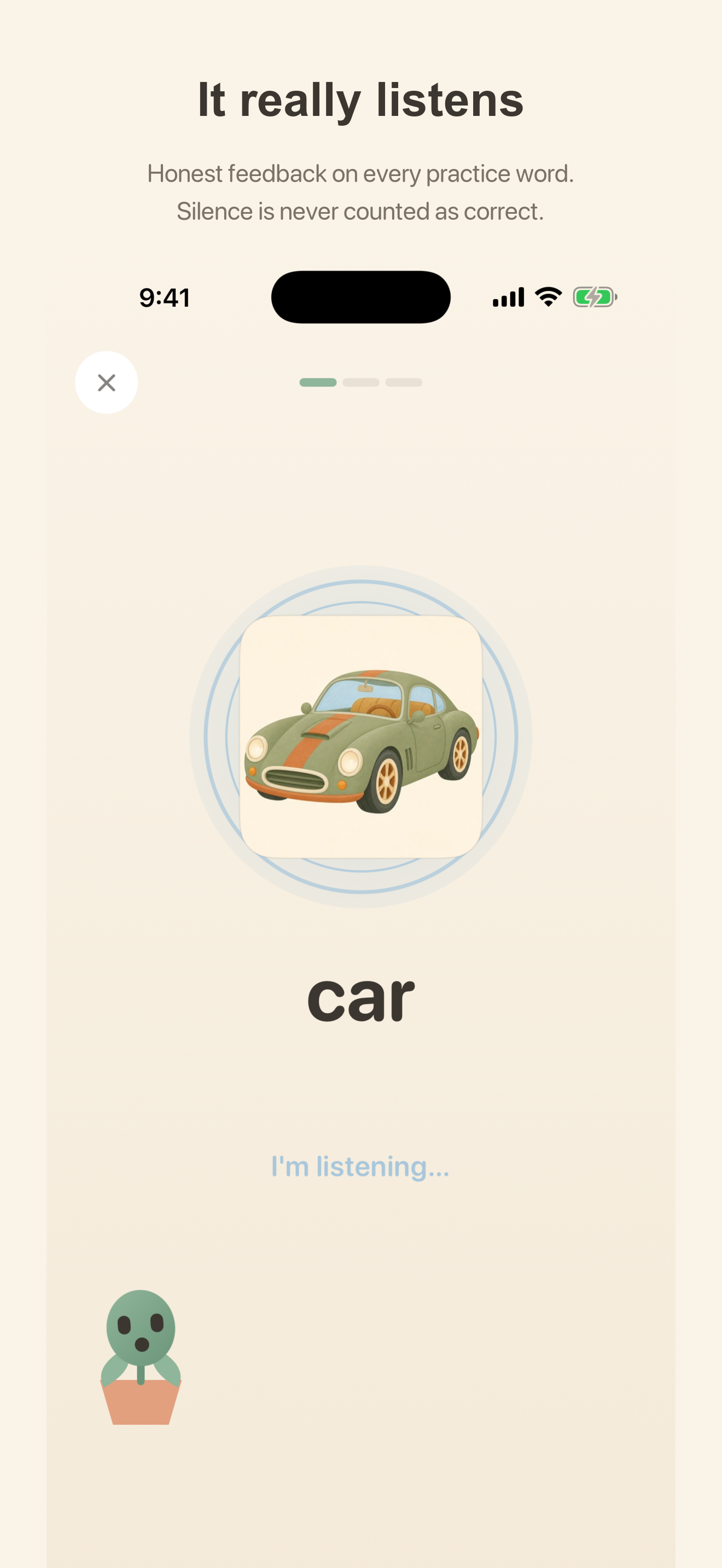
Using Apple’s on-device speech recognition, the app listens for that whole word and tells you whether it heard it. It recognises whole words, not individual speech sounds, and it never scores pronunciation. When it isn’t sure, it says so, banks the attempt, and hands the call to the grown-up’s ear — Try again, Almost, or Got it. Quiet or unclear tries are never marked correct.
Who it’s for
For families practising between speech-language pathology appointments, or where therapy is hard to reach — with a grown-up, not an algorithm, in charge of every judgment. SLPs receive a one-page weekly PDF a family can bring in.
Accessibility built in
On-device, so practice audio stays on the device — the App Store privacy label reads “Data Not Collected”. No account, illustrated words, calm pacing, no shame mechanics.
The ladder
Every sound follows the articulation ladder speech-language pathologists use, and the next rung opens only when the one below is reliable — so practice always sits at the right level instead of jumping to sentences on day one.
On the earliest rungs — a sound on its own, a syllable — SpeechSeed doesn’t pretend it can judge. It banks the attempt, says so, and the grown-up who heard it is the scorer. When it isn’t sure at any level, it hands the call to your ear: Try again, Almost, or Got it. Silence is never counted as correct.
A day with SpeechSeed
Ten calm minutes after dinner: five R words, a wobbly “wabbit”, two clear “rabbit”s — each verdict made by the parent who actually heard them. The garden grows a little.
The SLP gets a one-page PDF: days practised, words attempted, per-sound accuracy, the 7-day trend — every number from real verdicts only. Ten minutes of the session saved for actual therapy.
A classroom aide runs the day’s free session on a shared iPad in the quiet corner — no accounts, nothing to log into, and an adult ear making every call the app can’t.
For speech-language pathologists
SpeechSeed recognises whole words with Apple’s on-device speech recognition — never phonemes, never a pronunciation-quality score. Uncertain attempts are banked and handed to the grown-up. Silence never passes. The ladder is reliability-gated, so home practice stays at the level you set rather than racing ahead of it.
Families can bring you a one-page weekly PDF summary, and the app’s free self-check lists the signs that mean an SLP assessment is worth a call — it routes families to you, never around you. We never imply SLP endorsement, and the app says in its own voice that it does not replace therapy.
More on how we work with clinicians: for SLPs & therapists.
In the classroom
The free tier runs on a shared classroom iPad with no accounts to provision and an App Store privacy label that reads “Data Not Collected” — the child’s voice never leaves the device. Honest limits: the free tier is one practice session a day per device; verdicts at the sound and syllable rungs need an adult ear; and a quiet corner matters, because it listens.
SpeechSeed is practice between sessions — it is not a curriculum, an intervention, or IEP service delivery. Setting one up? See teachers & classrooms.
Procurement facts, each with an Apple citation: how schools get our apps.
Honest limits
A practice and support tool. It does not diagnose, treat, or replace professional care, and it does not score an individual speech sound the way a speech-language pathologist can.
Questions, answered honestly
SpeechSeed is free to use; any optional upgrade is shown in the App Store before purchase.